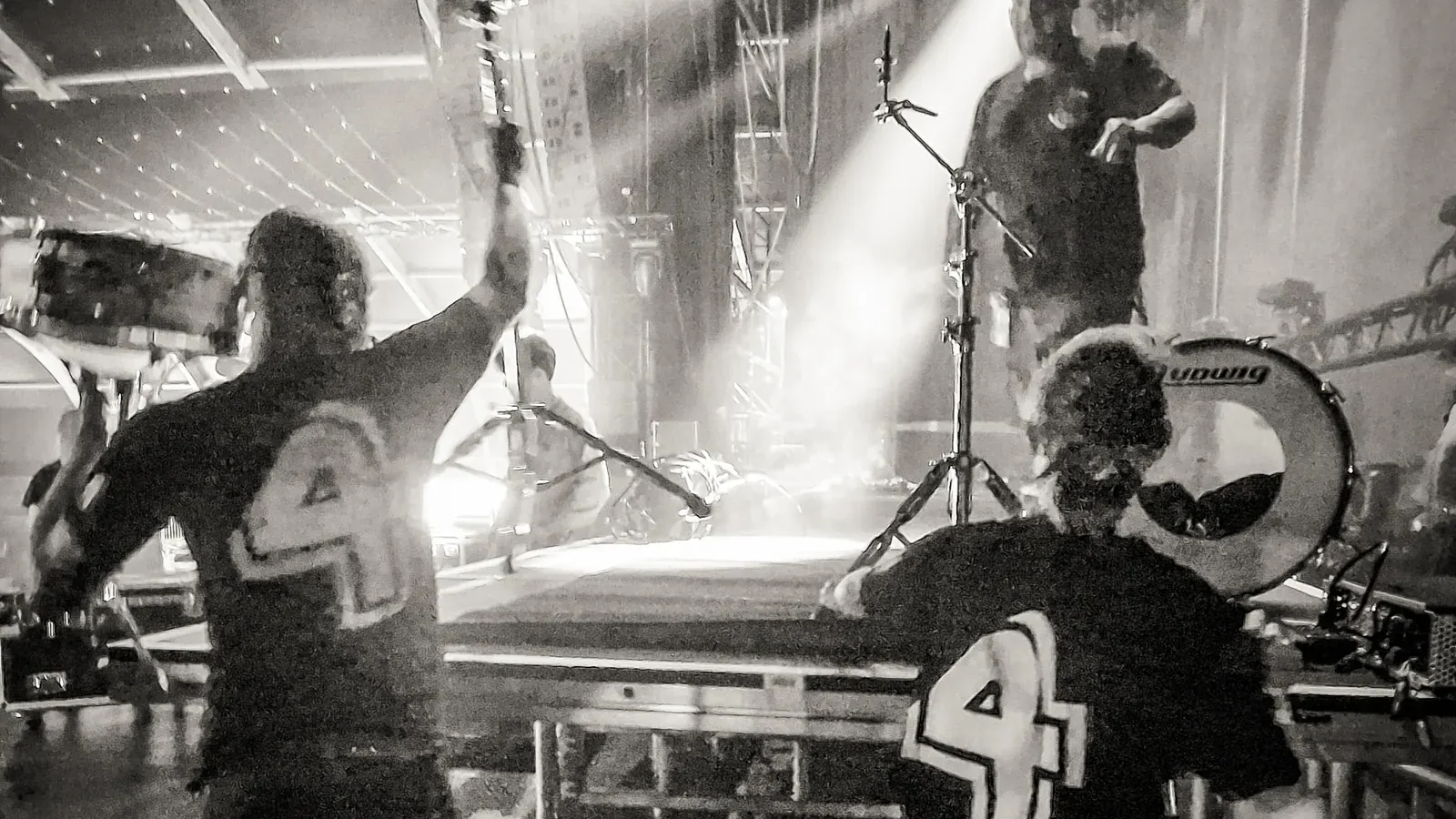
Everyone sees the show. Almost no one sees who built it.
If everything goes well, you do not see us. That is more or less the job description. The artist gets the applause, the audience gets the goosebumps, and the stagehand gets an empty field at 4 in the morning and a truck that still needs loading. Yet our trade has existed for more than 2,500 years. Time to put that history in the spotlight for a moment. Just once, then the light can go out again.
After the nadar barrier, the cable tie and the gaffer tape, part four of this series is not about equipment, but about the people who haul it.
First, something personal
My first time on a stage was at the Sportpaleis. Not as crew, but as a child: handing over flowers on stage at Night of the Proms. My dad worked there, so I was walking around between the cables and cases before I even knew it was a profession. Years later, I took over his company. Some things you do not choose, they choose you.
But anyway. Back to the beginning. And that beginning goes much further back than you might think.
Ancient Greeks: the first machine operators
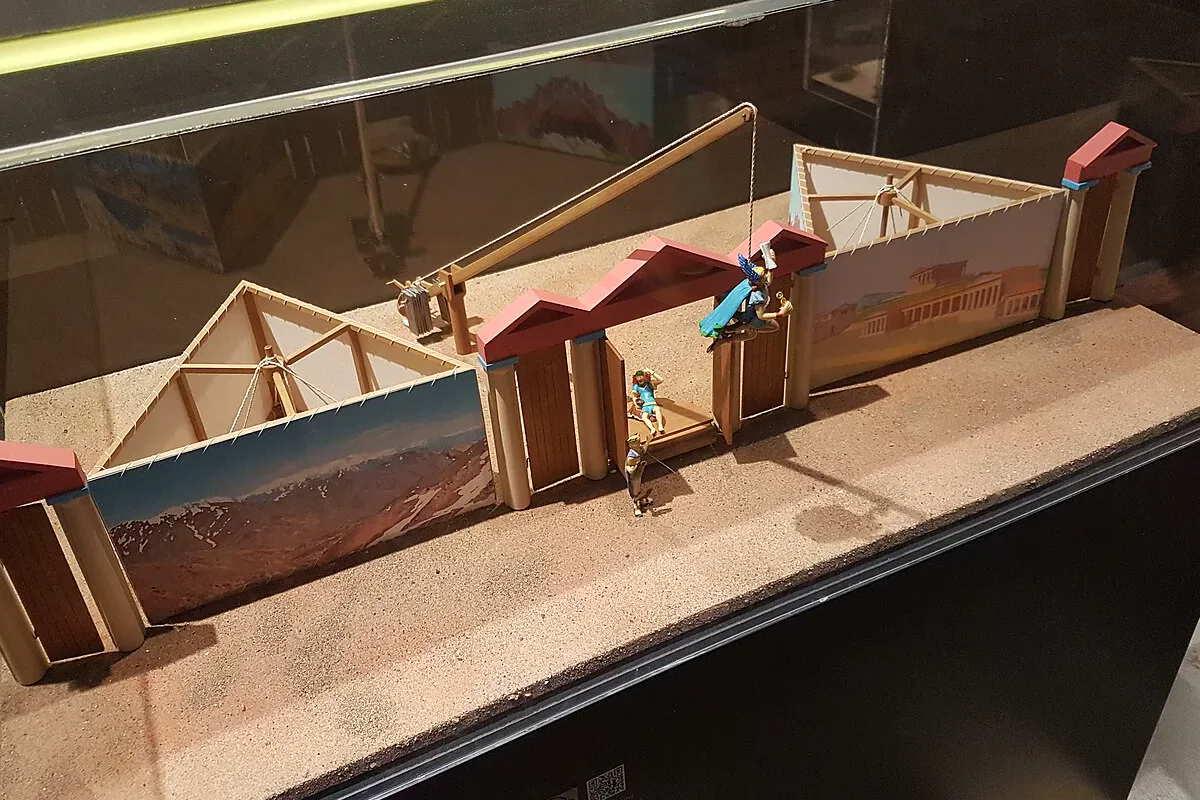
Greek theatre around 2,500 years ago already had technology. Serious technology. The most famous machine was the mechane: a wooden crane that made actors playing gods "fly" above the stage. If the story got tangled up, they simply lowered a god from the sky to solve everything. That is where the expression deus ex machina comes from: the god from the machine.
And who operated that crane? Exactly. Nameless men behind the scenes. No applause, but all the weight. The first stagehands, before the term even existed.
Japan: why crew works in black
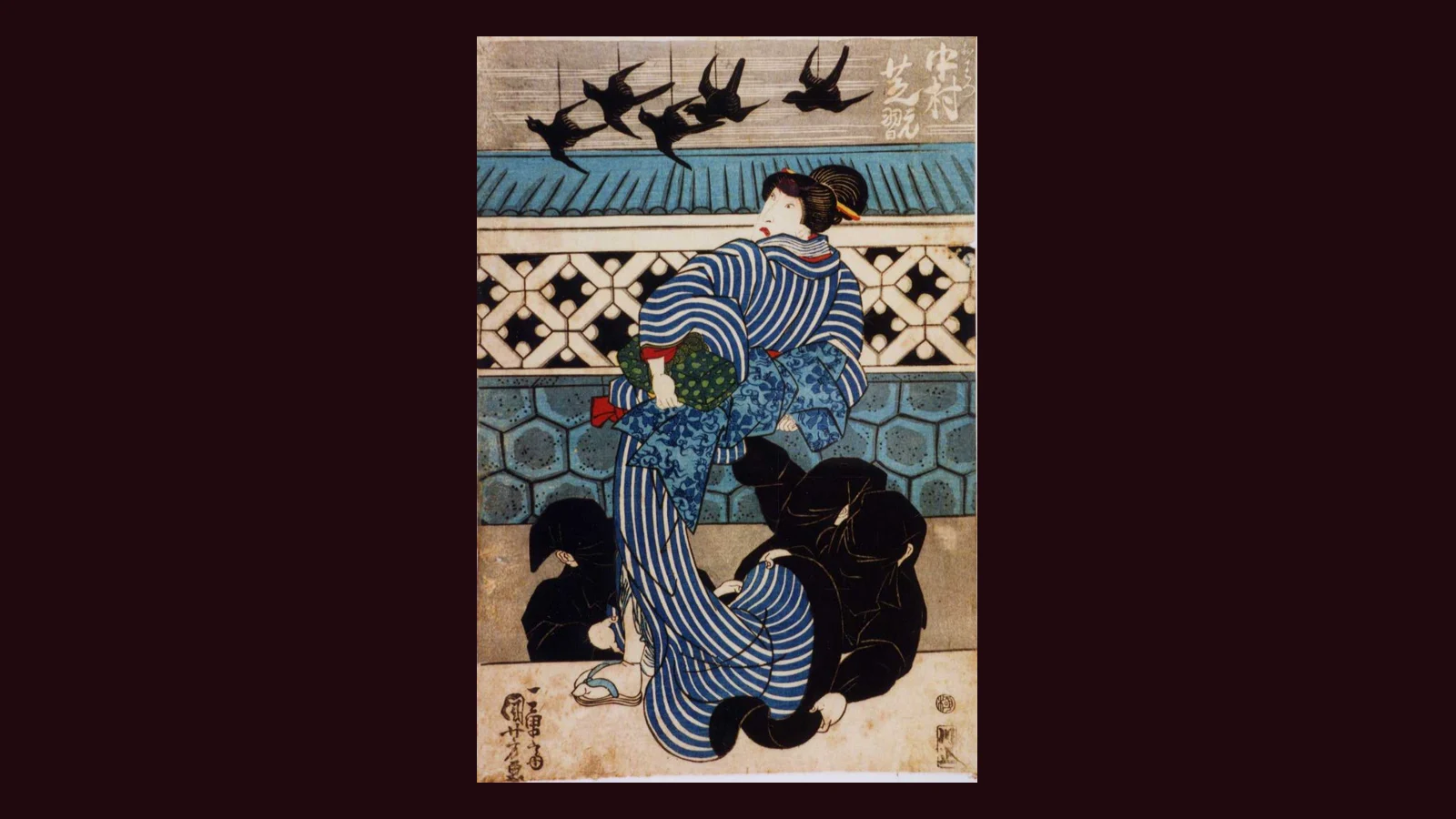
Now jump with me to Japanese kabuki theatre. For centuries, kuroko have moved around there: stagehands dressed head to toe in black, with hoods over their heads. They move scenery, hand over props and help with costume changes, right in full view of the audience.
The agreement is simple: anyone dressed in black does not exist. The audience literally looks straight through them.
Sound familiar? That is exactly why crew still works in black today. Not because it looks cool (although it does), but because black is invisible beside a lit stage. The kuroko understood that before a single spotlight existed.
Sailors: the inventors of rigging
Now it gets interesting. A large part of our professional vocabulary comes from the sea.
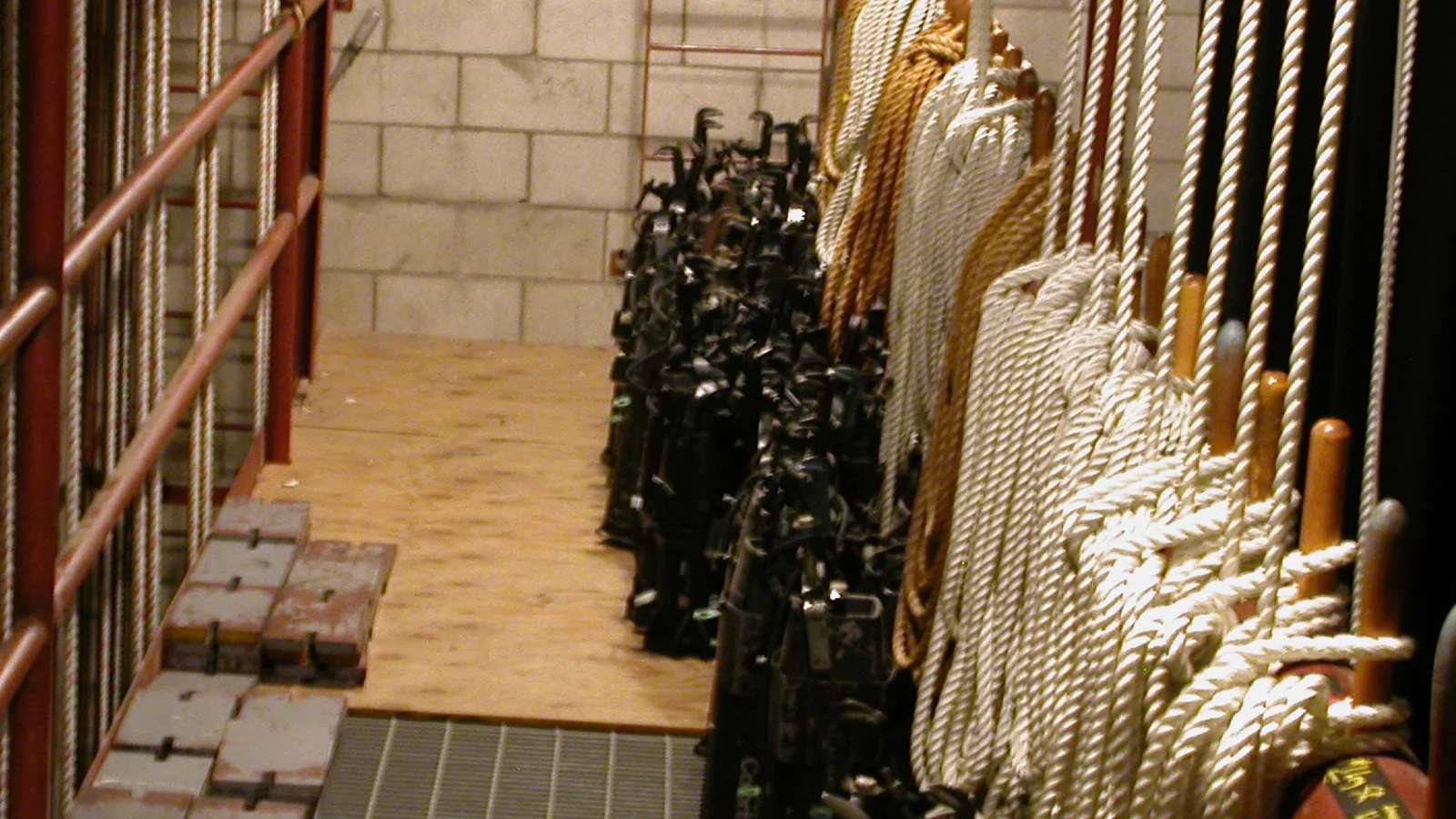
In the age of sail, sailors spent months ashore outside the sailing season, and those men could do something theatres needed: work with ropes, pulleys and heights. They found work behind the scenes, and the first stage curtains and sets were moved using techniques taken directly from sailing ships. That is how the fly systems still found in every theatre today came about.
The traces are still everywhere in our vocabulary: rigging, rigger, deck, crew. All nautical terms.
Then there is that old theatre superstition: never whistle on stage. The explanation usually told is that riggers gave each other whistle signals to raise or lower scenery, just as they did on board. Anyone whistling at random risked bringing a piece of scenery down on their head. Historians debate how literally that story is true, but the logic is sound: on a stage, you communicate clearly or something falls. That is still exactly as true today, only now we whistle through an intercom.
1893: the stagehand becomes a profession
For a long time, stage work was a side job, not a profession. That changed in late 19th-century New York.
In 1886, New York stagehands stopped work for better pay and better hours. Theatre owners brought in unskilled replacements, and then something wonderful happened: the actors refused to go on because the sets were collapsing. No show without good people behind the scenes. The strikers won.
On 17 July 1893, representatives of stagehands from eleven cities gathered in New York and founded a union that still exists today: IATSE, the International Alliance of Theatrical Stage Employees. It started with around 1,500 stagehands and today has more than 150,000 members in the US and Canada, from Broadway to Hollywood.
So 1893 is more or less the birth year of the stagehand as a recognised profession.
Rock 'n' roll: the birth of the modern crew
Until the 1960s, the stagehand belonged to the building: every theatre had its permanent team. Then rock music arrived, and it did not stay in one venue.
Bands started touring with more and more equipment: PA towers, lighting rigs, scenery. A new kind of person appeared: the roadie, who travelled with the show. Flight cases were invented, trusses were standardised, and suddenly every city needed local crew to unload the trucks, help build the show and dismantle everything again at night.
That model, a permanent touring crew supplemented by local stagehands, is exactly how the industry still operates today. From the Sportpaleis to the festival fields. And that local crew is us.
Today: from labourer to professional
The biggest change of the last twenty years is not the equipment, but the profession itself. Today's stagehand is no longer just "an extra pair of hands", but a trained worker: forklift and MEWP certificates, safety training, and knowledge of rigging and safe loading and unloading.
Which makes sense. These days, tonnes of equipment hang above every stage, with thousands of people standing underneath. Safety is not paperwork, it is the core of the trade. The nameless Greek at his crane, the kuroko in black, the sailor at his rope and the forklift operator on the festival field are essentially doing the same thing: making the show possible without being the show themselves.
That is no small thing. It is a profession. And for 2,500 years, one worth being proud of.
A few fun facts
- Deus ex machina is literally crew language. Every time someone uses that expression, they unknowingly honour a Greek stagehand at a wooden crane.
- "Break a leg" has dozens of explanations, but one version comes from the wings: anyone allowed onto the stage (past the "legs", the black side curtains) got paid. So a broken "leg" was good news.
- The 1886 strike was won thanks to badly built sets. The best advertisement for craftsmanship ever: let amateurs try it once.
- Hemp houses. Old theatres where everything is still hoisted with hemp rope and sandbags are called "hemp houses". Some still exist, and anyone who gets to work there learns rigging the way sailors did it.
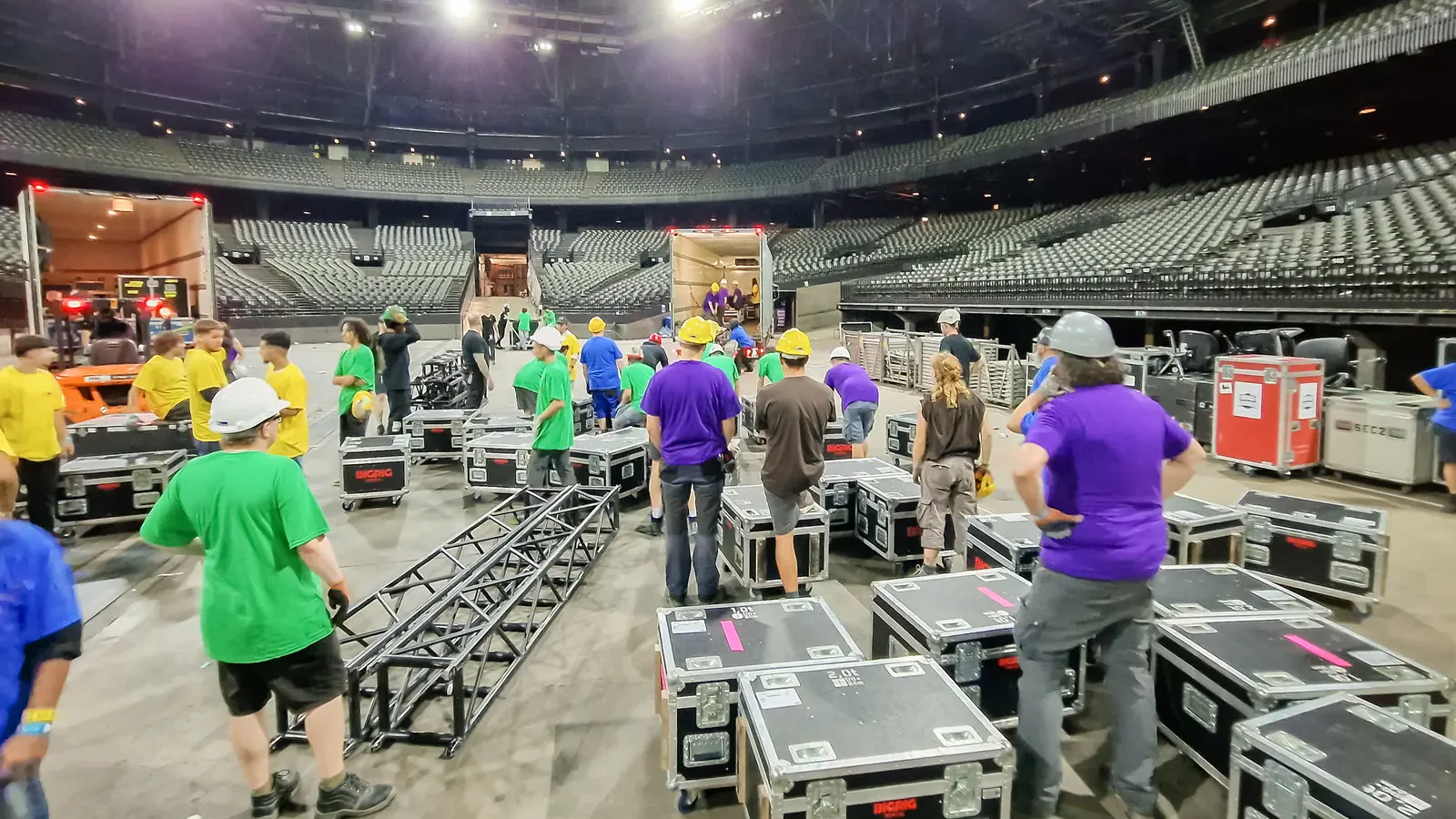
Next time you are at a festival, do not look at the stage. Look beside it. That is 2,500 years of history standing there. Dressed in black, with gloves on.
Frequently asked questions
What does a stagehand do?
A stagehand helps safely build and dismantle stages, lighting, sound, scenery and other event equipment. Stagehands & event crew also load and unload trucks and support the technical production before, during and after a show.
Why does crew always wear black?
Crew wears black because dark clothing attracts as little attention as possible beside a lit stage. That theatre tradition recalls Japan's kuroko, black-clad stagehands who are meant to be invisible to the audience.
Why are you not allowed to whistle on stage?
According to a familiar theatre tradition, riggers once used whistle signals to raise or lower scenery. Whistling at random could therefore give the wrong signal and cause danger.