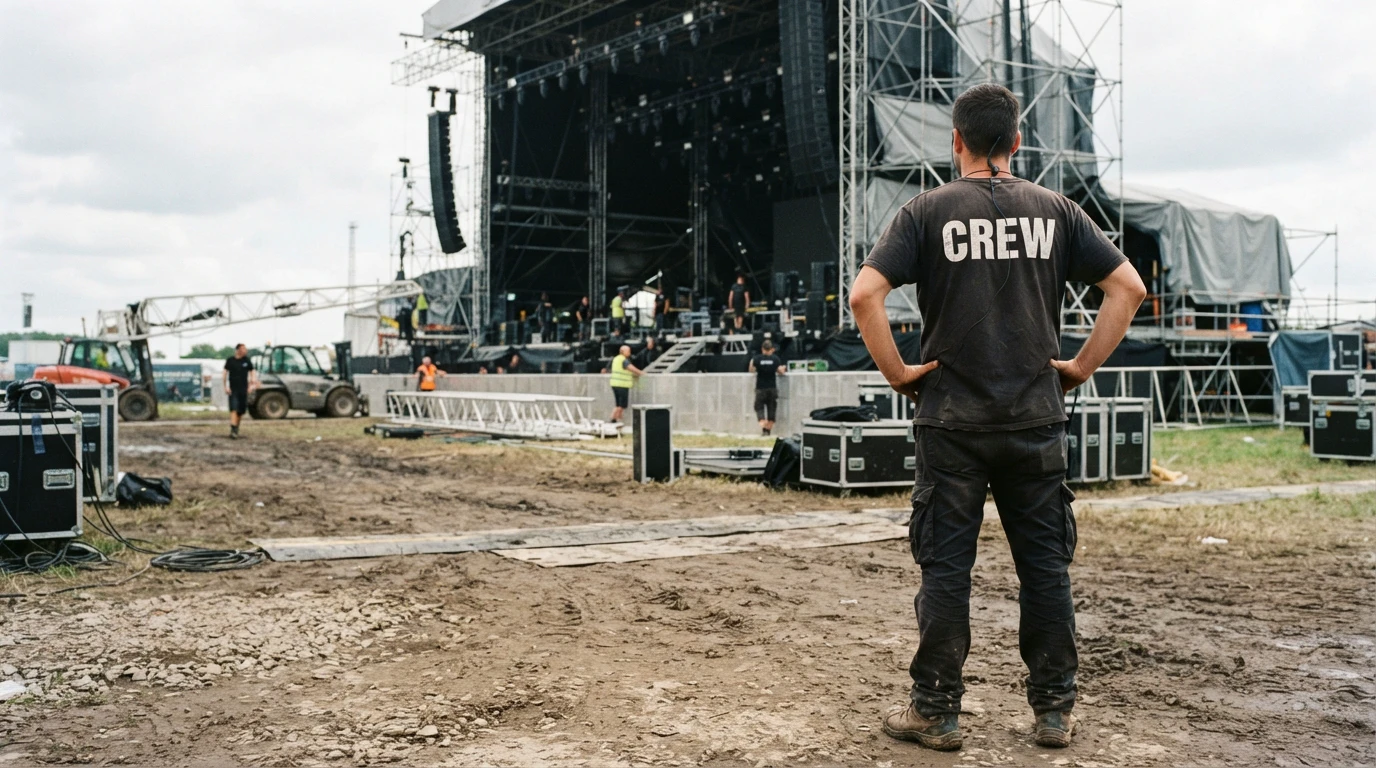
We call ourselves crew every day. But what are we actually saying?
Crew here, crew there. Crew catering, crew parking, crew shirt, local crew. The word is so deeply baked into our industry that no one stops to think about it. Until you look it up. Because the origin of "crew" is more than a fun fact: it is almost the perfect summary of what we do.
This is part six in the series about the stories behind everyday crew words and equipment, after the nadar, the cable tie, the gaffer tape, the stagehand and the mojo.
The short answer: crew means "growth"
The family tree of the word goes like this, from old to new:
- Latin: crescere. To grow, increase or become greater.
- Old French: creue. Literally "the growth": an increase, a reinforcement, extra people.
- Middle English: crue or crewe. Borrowed from French with one very specific meaning: a group of soldiers sent as reinforcements.
The earliest known record appears in the English parliamentary rolls of 1455. It concerns the pay of three hundred men assigned to someone as a "Crue", on top of his regular force. Extra men, in other words, brought in to complete a job the permanent team could not handle alone.
Read that sentence again. The very first crew in history was hired reinforcement. Six centuries later, after a long detour, that word landed on the festival field with exactly the same meaning. No marketing agency could improve on that.

From soldiers to sailors to the stage
The meaning then shifted step by step:
- By around 1570, "crew" could mean any group of people. Poets such as Spenser wrote about "a noble crew of Lordes and Ladies": a company of nobles. Fancy people, still a crew.
- By around 1690, the word had acquired the two meanings it would never lose: a team working together on one task, and specifically the people who operate a ship.
And that completes the circle. As you could read in the blog post about the stagehand, sailors worked in theatres between sailing seasons. They brought their ropes, pulleys and vocabulary with them: rigging, deck, and crew. From ship to theatre, from theatre to rock-'n-roll, and from there to every festival in the world.
The crew family: crescendo, croissant and... recruitment
The best part of etymology is discovering the family. Everything that comes from the Latin crescere (to grow) is linguistically related to crew. And it is quite a list:
- Crescendo. Music that grows in volume. The lighting operator who makes the show swell and the stagehand who built the stage are linguistic cousins.
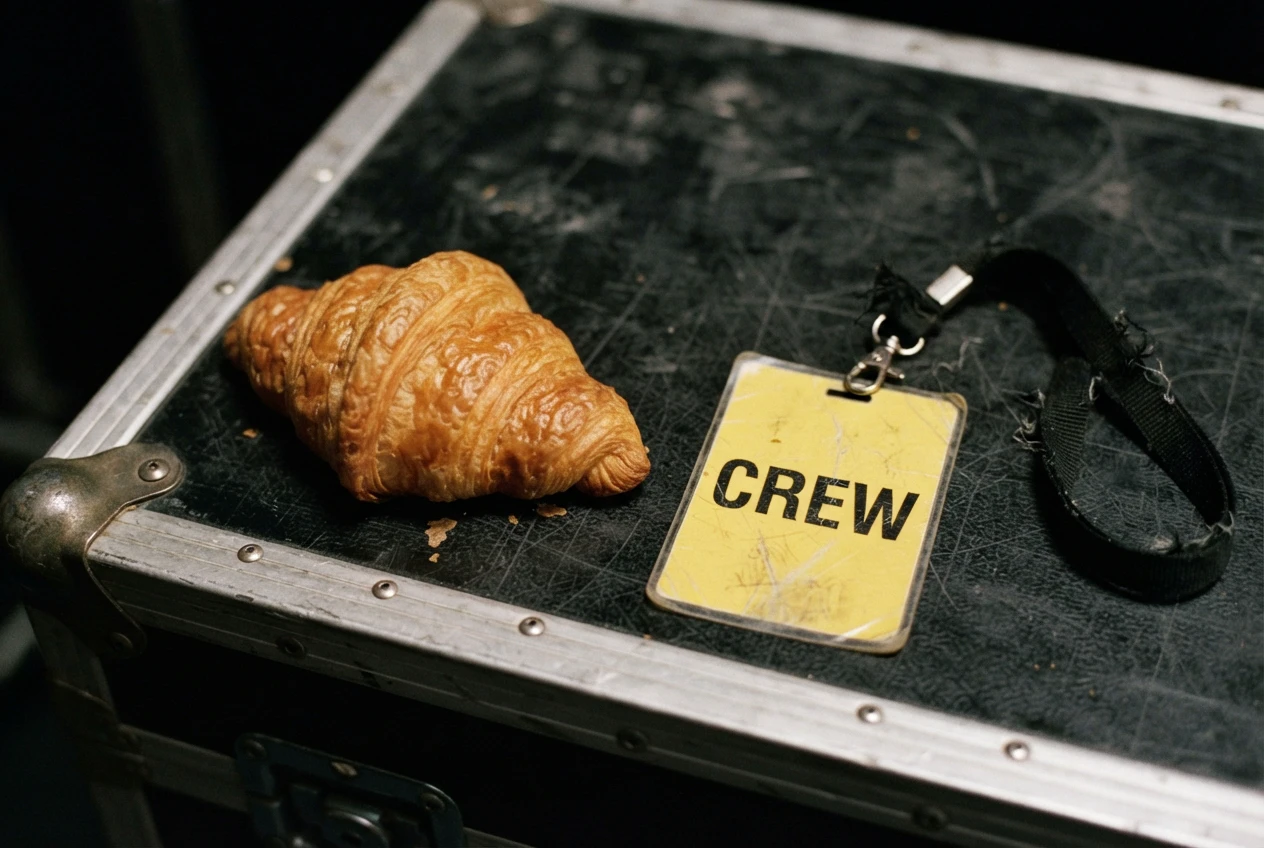
- Croissant. Named after the waxing moon, "la lune croissante". The moon that grows. Your breakfast pastry on build day is literally related to the word on your crew shirt.
- Increase and decrease. To grow and to diminish.
- Concrete and creation. These also grew from the same root: what has "grown together" (concrescere) and what is "brought into being".
- And the best of all: recruit. Recruitment comes from the Latin recrescere: to grow again. A recruit is literally "new growth" for a team.
Crew and recruitment are brother and sister. Anyone who recruits crew is linguistically doing the same thing twice: making growth grow. We did not know it when we started, but Hands 4 Events is a pleonasm with a VAT number.
Why this is more than a fun fact
There is an idea in this story that I like to share with everyone who starts with us.
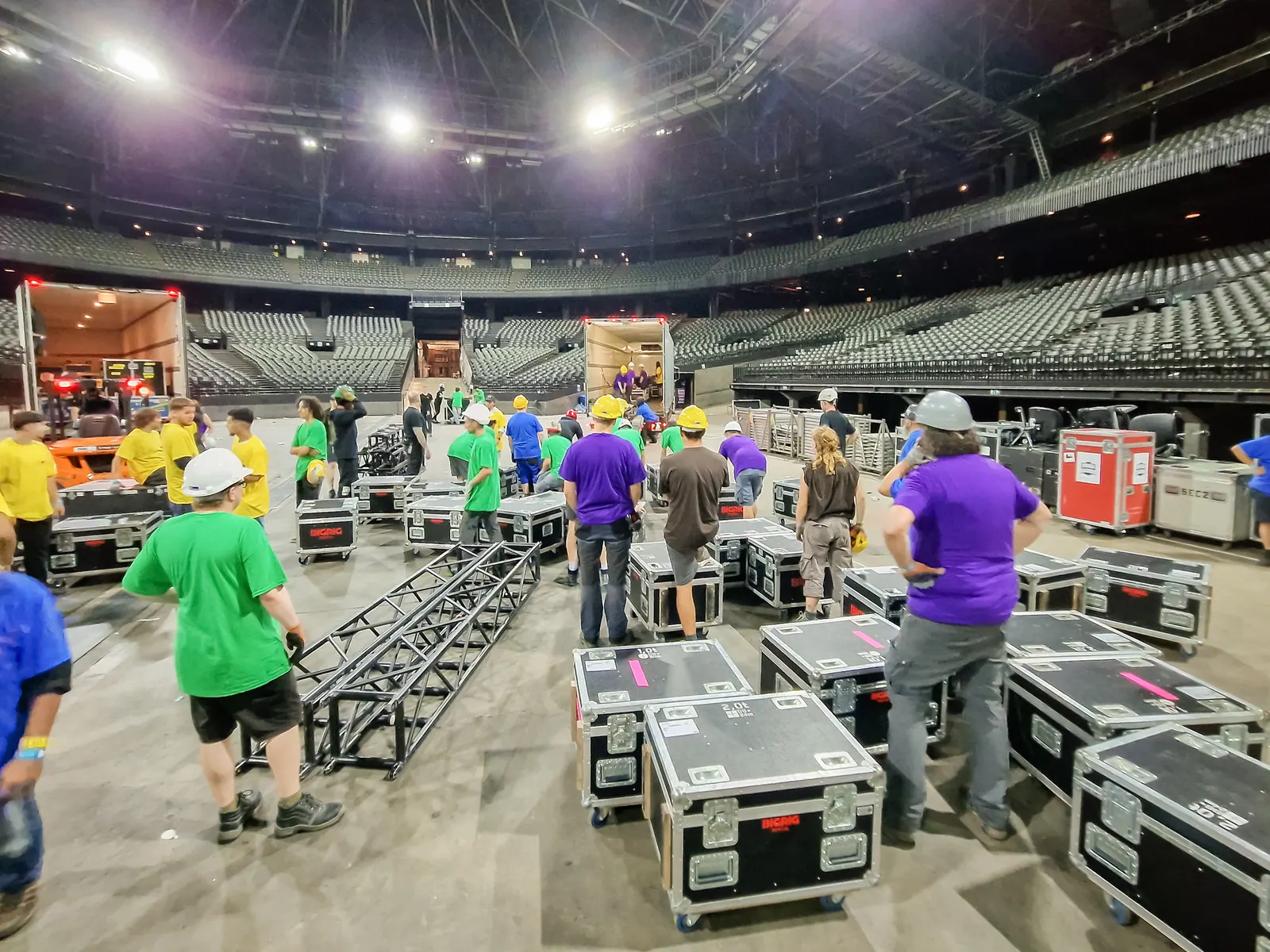
Crew does not mean "the people who do the dirty work". Since 1455, crew has meant the reinforcement that arrives to make something possible that would otherwise not work. A venue's permanent team cannot rebuild an arena overnight. A touring production cannot bring forty people to every city. That is why crew exists: you join in, you make the whole stronger, and when the work is done, you leave again.
Not an appendage. Reinforcement. That is a word to be proud of.
A few interesting facts
- The crew cut comes from rowers. The closely cropped hairstyle appeared in 1938 and was named after the rowing teams, or "crews", of Harvard and Yale that wore it. From the oars to the barracks to the barber.
- Milton and Spenser were already writing about crews. The word appears in The Faerie Queene (1590) and Paradise Lost (1667). Crew therefore has more literary credentials than many a fancy word.
- In French, "crue" still exists. Today it means the swelling of a river, or high water. When the Meuse is "en crue", it is growing. Same word, same idea.
- Coincidence? The "cru" in wine is related too. A grand cru is literally "what has grown" in a particular place. Crew in the field, grand cru in the glass: both children of crescere.
Next time you put on your crew shirt, you will know what it really says: reinforcement, for six hundred years and counting. Wear it accordingly.